
Medicinal products represent one of the most important tools in modern medicine. They enable the prevention, treatment, and management of numerous diseases, significantly contributing to improving patients’ quality of life and life expectancy.
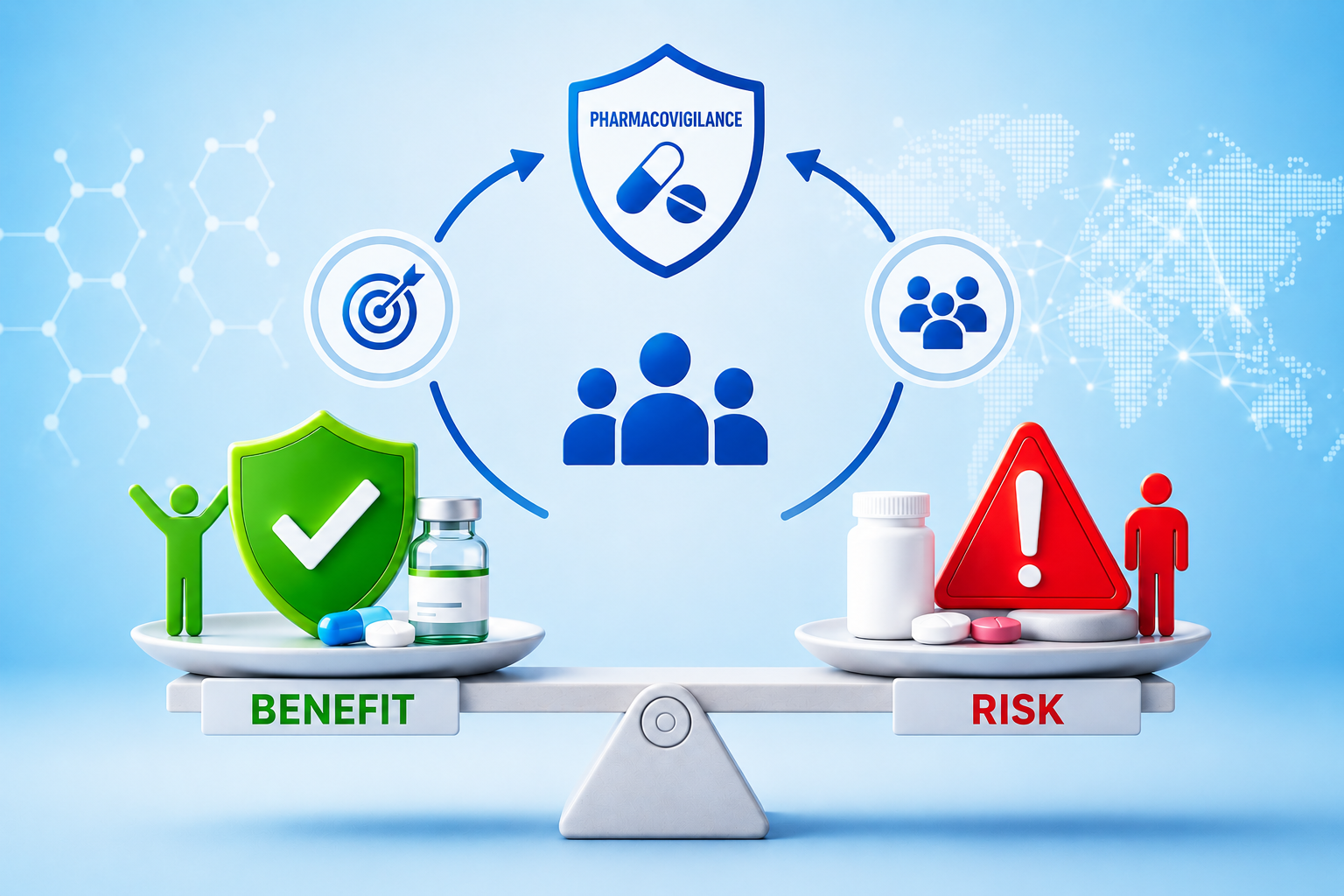
However, no medicine is entirely free of risks. For this reason, every treatment must be assessed by considering the benefit–risk balance, meaning the comparison between the expected therapeutic benefits and the potential adverse effects associated with its use.
Before obtaining marketing authorization, medicinal products undergo preclinical and clinical studies to demonstrate their efficacy, quality, and safety. However, these data are not always sufficient to identify all possible adverse reactions or issues related to the use of the medicinal product in real clinical practice.
Clinical trials involve a limited number of selected patients and are conducted under controlled conditions. After commercialization, however, the medicinal product is used in much larger and more heterogeneous populations, including elderly patients, children, pregnant individuals, or patients with comorbidities and multiple treatments. In addition, some adverse events may only emerge after prolonged or widespread use of the product.
Both in the pre- and post-marketing phases, pharmacovigilance plays a fundamental role in the continuous monitoring of the benefit–risk profile of medicinal products.
What is pharmacovigilance
According to the World Health Organization (WHO), pharmacovigilance is defined as “the science and activities relating to the detection, assessment, understanding and prevention of adverse effects or any other drug-related problem.”
The objective of pharmacovigilance is to ensure continuous monitoring of drug safety throughout the entire lifecycle of medicinal products. In doing so, it contributes to protecting public health and promoting the increasingly appropriate and safe use of medicines.
Main pharmacovigilance activities
Pharmacovigilance activities include the collection and management of reports of suspected adverse reactions, the continuous evaluation of the benefit–risk profile of medicinal products, and the monitoring of safety data.
These activities also include the identification of new safety signals, the implementation of risk minimization measures, and the communication of safety information to regulatory authorities, healthcare professionals, and patients.
Who is responsible for pharmacovigilance
Pharmacovigilance involves multiple stakeholders within the healthcare system, each with specific responsibilities.
Marketing Authorisation Holders (MAHs) are required to establish and maintain a pharmacovigilance system in compliance with current regulations. They must continuously monitor the safety of their medicinal products and submit all relevant safety information to the competent authorities.
National and European regulatory authorities oversee the system and evaluate the collected data, taking action when necessary to ensure safety.
Spontaneous reporting is an essential tool for the timely detection of potential risks and for expanding knowledge of the safety profile of medicinal products. Healthcare professionals, including physicians and pharmacists, play a key role in reporting, alongside patients, who in many cases can directly report suspected adverse reactions through systems provided by the competent health authorities.
Conclusions
Pharmacovigilance is not only a regulatory requirement for pharmaceutical companies, but above all a fundamental component in safeguarding patient health.
Through the continuous monitoring of medicinal products and the collaboration between companies, regulatory authorities, healthcare professionals, and patients, it is possible to ensure increasingly high safety standards and to promote a responsible and informed use of medicines.
References
- World Health Organization. The importance of pharmacovigilance: Safety monitoring of medicinal products.
- Directive 2010/84/EU of the European Parliament and of the Council.
- Regulation (EU) No. 1235/2010