In the pharmaceutical industry, preventing errors and operational issues is essential to protect product quality, patient safety, and business continuity. Every activity involves a certain level of risk that must be understood, assessed, and managed appropriately.
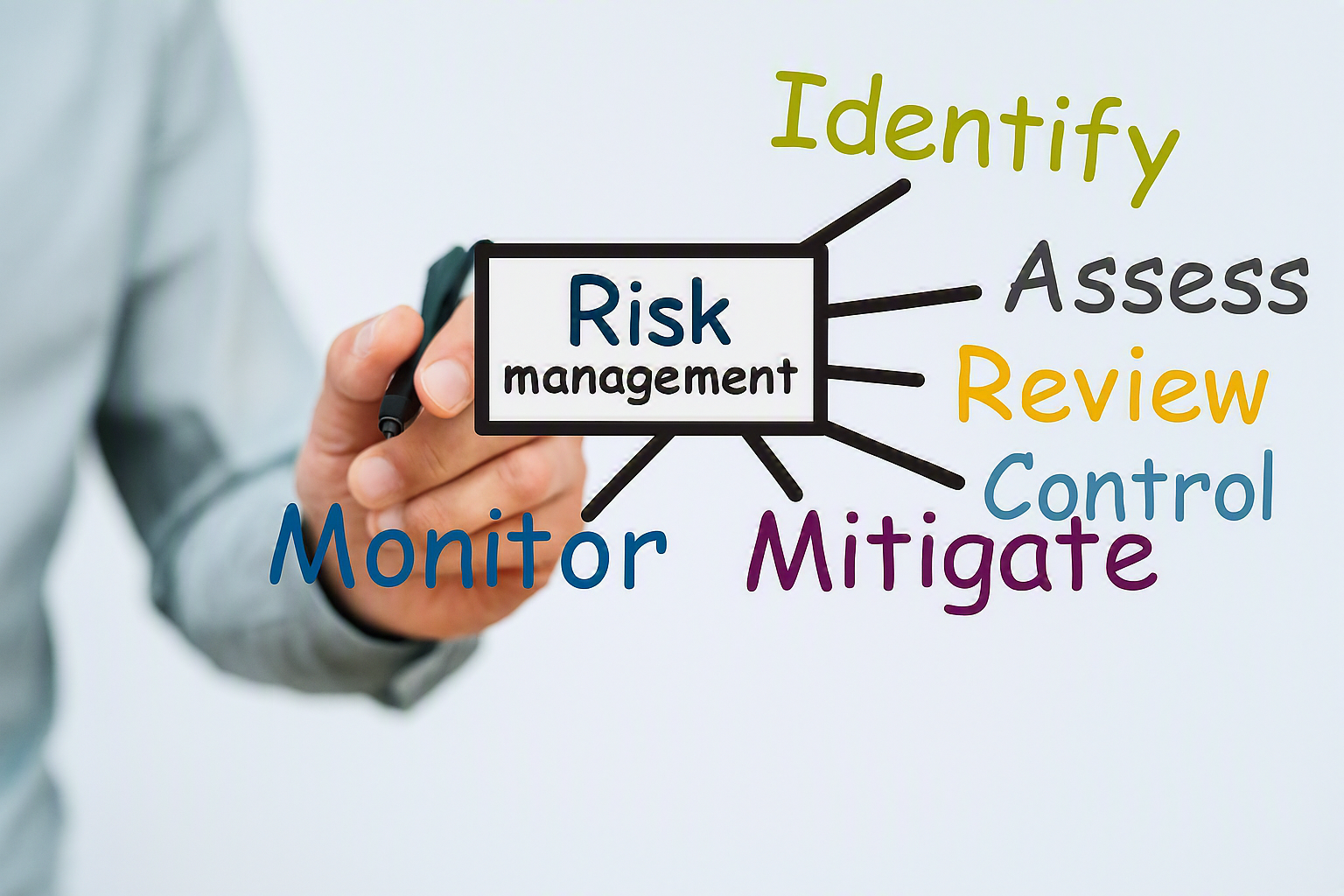
Risk management is the structured approach used to identify, analyze, control, and monitor risks. Its purpose is to anticipate potential problems, support evidence-based decision-making, and improve process reliability.
Within the pharmaceutical sector, risk management is an integral part of the quality system and is applied across multiple functions, including manufacturing, quality control, pharmacovigilance, and Medical Information.
Risk Management within the Pharmaceutical Quality System
Within the pharmaceutical quality system, risk management supports decision-making through a risk-based approach. Activities are evaluated not only from a procedural perspective but also according to potential vulnerabilities, the likelihood of occurrence, and their possible impact on quality, safety, and efficacy.
Risk management is integrated into key Quality Management System (QMS) processes, including deviations, non-conformities, CAPAs, and change management activities. In these areas, it helps establish priorities, identify appropriate actions, and allocate resources according to the level of criticality.
For example, a deviation with the potential to impact product quality or patient safety requires a more thorough assessment than a minor deviation with limited consequences. As a result, organizations can make consistent and well-documented decisions while strengthening the effectiveness of the quality system and supporting continuous improvement.
Risk identification, assessment, and control
Risk management generally consists of four main steps: risk identification, risk assessment, risk control, and risk review.
The first stage involves identifying potential risks, namely situations that could compromise quality, safety, compliance, or process reliability. These may include operational errors, weaknesses in information flows, limitations of existing systems, or variability in the execution of activities.
Once identified, risks are typically evaluated based on the likelihood of occurrence, the severity of their impact, and, where relevant, their detectability. This assessment allows organizations to prioritize actions and distinguish between issues requiring immediate intervention and situations that can be monitored over time.
Next, risk control measures are defined and implemented to prevent identified risks, reduce their impact, or maintain them within acceptable levels. These measures may include more robust procedures, targeted training, additional controls, document standardization, or periodic reviews.
Finally, ongoing review activities make it possible to verify the effectiveness of implemented controls and update risk assessments as new information becomes available.
Applying Risk Management in Pharmacovigilance and Medical Information
Beyond the quality system, risk management principles are also applied across other pharmaceutical functions, particularly Pharmacovigilance and Medical Information.
In Pharmacovigilance, risk management supports medicine safety monitoring and contributes to critical activities such as adverse event collection and assessment, data quality management, signal monitoring, and compliance with regulatory timelines. Potential risks may include failure to identify a safety signal, errors in data collection or classification, incomplete information, or delays in reporting.
By applying risk assessment methodologies, organizations can identify the most vulnerable areas and strengthen controls, thereby reducing the likelihood that such situations affect the quality and effectiveness of the pharmacovigilance system.
Medical Information can also benefit from a risk-based approach, although the level of formalization may vary between organizations. Common risks include the accuracy, consistency, and appropriateness of information provided to healthcare professionals and other stakeholders. Examples may include incorrect interpretation of scientific evidence, responses that do not fully address the request, or inconsistencies between different information sources.
The implementation of approved standards, validated templates, scientific review processes, and shared quality criteria can help mitigate these risks and improve the reliability of the information provided.
In both functions, the underlying principle remains the same: identify critical points within processes and implement proportionate measures to prevent or reduce their impact, contributing to a more structured and quality-focused approach.
Conclusions
Risk management is an essential approach for preventing errors, managing operational challenges, and supporting effective decision-making within the pharmaceutical industry.
When integrated into the quality system and applied across multiple functions, it helps improve process reliability, strengthen controls, and promote the efficient use of resources.
Its value lies not only in the ability to manage problems when they occur but, above all, in the ability to anticipate them, prevent them, and transform them into opportunities for continuous improvement.
References
- ICH – ICH Q9(R1): Quality Risk Management
- ICH – ICH Q10: Pharmaceutical Quality System
- European Medicines Agency (EMA) – Good Pharmacovigilance Practices (GVP), Module I: Pharmacovigilance systems and their quality systems
- European Medicines Agency (EMA) – Good Pharmacovigilance Practices (GVP), Module IX: Signal management
- European Commission – EudraLex Volume 4 (EU GMP Guidelines, Chapter 1: Pharmaceutical Quality System)
- ISO – ISO 31000: Risk Management – Guidelines